Most gardeners have experienced it.
You walk outside expecting to admire your thriving tomatoes, roses, or vegetables, only to discover leaves full of holes, aphids covering stems, or entire plants being devoured overnight.
The first instinct is often to reach for a chemical spray.
But what if the very products you’re using to protect your garden are also harming the pollinators, beneficial insects, soil life, and wildlife that help your garden thrive?
The good news is that many experienced gardeners are moving away from chemical pesticides altogether—and seeing better results because of it.
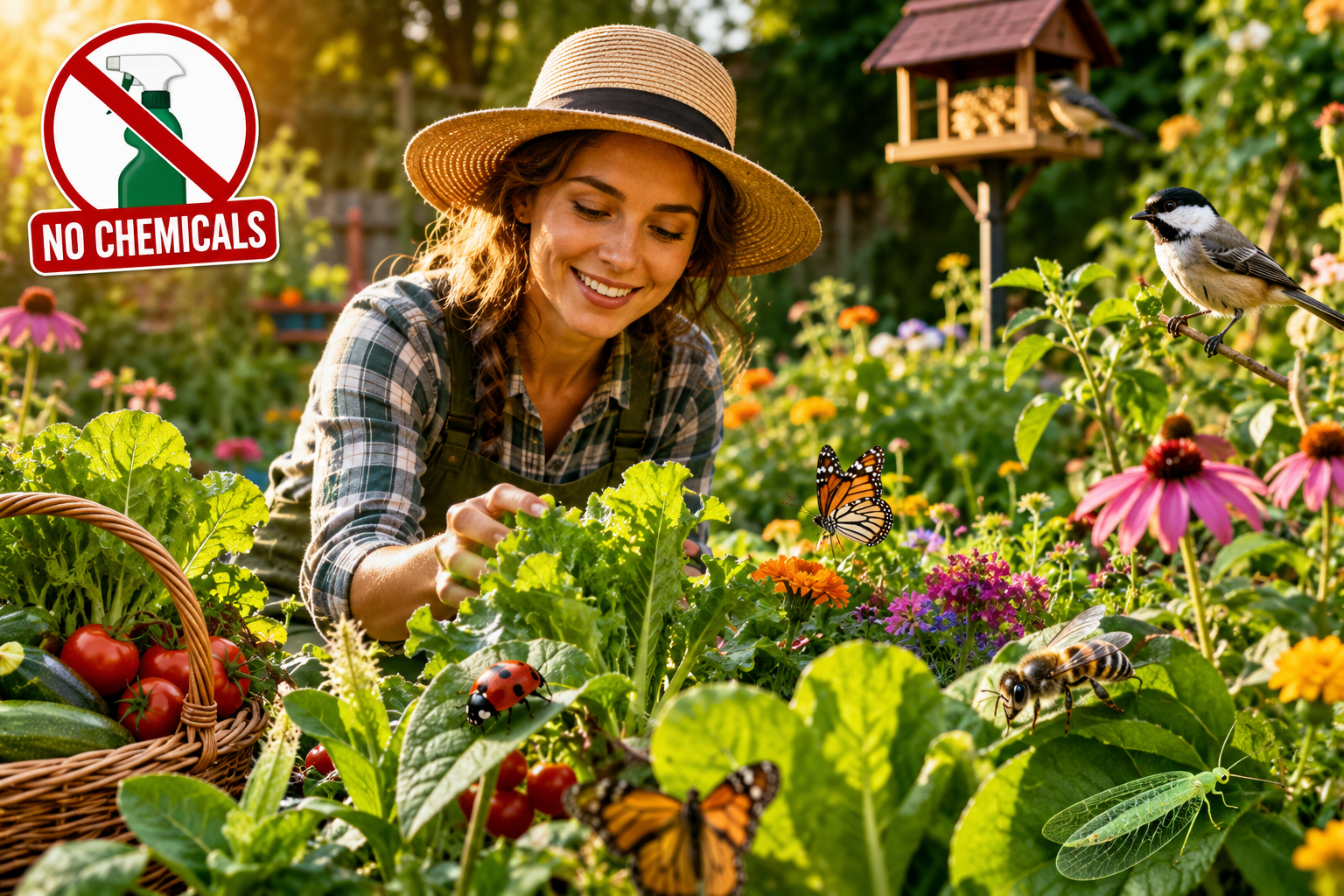
Instead of fighting nature, they’re working with it.
The result? Healthier plants, more pollinators, fewer pest outbreaks, and a garden that practically helps protect itself.
If you’re tired of spraying chemicals and still dealing with pest problems, these poison-free pest control methods can completely change the way you garden.
Why Chemical Pesticides Often Create Bigger Problems
Many store-bought pesticides kill the insects you don’t want—but they also wipe out many of the insects you do want.
This includes:
- Bees
- Butterflies
- Ladybugs
- Lacewings
- Ground beetles
- Native pollinators
When beneficial insects disappear, pest populations often bounce back even stronger because their natural predators are gone.
Chemical pesticides can also:
- Damage soil health
- Contaminate water sources
- Harm birds and wildlife
- Create pesticide-resistant pests
- Expose children and pets to harmful chemicals
That’s why more gardeners are turning to natural solutions that strengthen the entire ecosystem instead of disrupting it.
1. Invite Nature’s Pest Control Team Into Your Garden
One of the easiest ways to reduce pest problems is by attracting insects that already love eating garden pests.
Many beneficial insects work around the clock without charging you a penny.
Ladybugs
Ladybugs are famous for their appetite.
A single ladybug can consume dozens of aphids every day.
To attract them, grow:
- Yarrow
- Dill
- Marigolds
- Calendula
- Fennel
Lacewings
Lacewing larvae are often called “aphid lions” because they aggressively feed on:
- Aphids
- Whiteflies
- Mealybugs
- Mites
Planting sunflowers and cosmos can help bring them into your garden.
Tiny Parasitic Wasps
Don’t let the name scare you.
These tiny beneficial insects are harmless to people but deadly to garden pests.
They naturally control:
- Caterpillars
- Aphids
- Whiteflies
Herbs like dill, parsley, and fennel help attract them.
2. Use Companion Planting to Confuse and Repel Pests
Some plants naturally protect others.
This gardening technique has been used for centuries and remains one of the simplest pest-control methods available.
Popular companion planting combinations include:
Tomatoes + Basil
Basil may help repel:
- Whiteflies
- Mosquitoes
- Certain plant-damaging insects
Many gardeners also swear tomatoes taste better when basil grows nearby.
Carrots + Onions
This pairing works because each plant helps confuse the other’s major pest.
- Onions deter carrot flies
- Carrots help deter onion flies
Cabbage + Nasturtiums
Nasturtiums act as a “sacrifice plant.”
Aphids often choose them instead of attacking your vegetables.
3. Make Powerful Natural Pest Sprays at Home
You don’t need expensive chemicals to discourage pests.
Many gardeners successfully use simple homemade sprays.
Neem Oil Spray
One of the most popular natural solutions.
Mix:
- 2 teaspoons neem oil
- 1 teaspoon mild liquid soap
- 1 quart water
This mixture helps manage:
- Aphids
- Spider mites
- Whiteflies
Garlic Spray
Pests hate strong smells.
Blend:
- 10 garlic cloves
- 1 quart water
Strain and add a small amount of liquid soap.
Spray directly on affected plants.
Chili Pepper Spray
Chewing insects often avoid plants treated with spicy sprays.
Mix:
- 1 tablespoon cayenne pepper
- 1 quart water
- A few drops of liquid soap
Apply lightly to affected foliage.
4. Create Physical Barriers That Pests Can’t Cross
Sometimes the simplest solution is the most effective.
Floating Row Covers
These lightweight fabrics:
- Block insects
- Allow sunlight through
- Let rainwater reach plants
Perfect for protecting vegetables early in the season.
Copper Tape
Slugs and snails dislike copper.
Adding copper tape around containers and raised beds often discourages these slimy invaders.
Garden Netting
Fine mesh netting protects:
- Berries
- Fruit trees
- Young vegetables
without harming wildlife.
5. Rotate Crops to Break Pest Cycles
Many pests spend winter hiding in the soil, waiting for their favorite plants to return.
When the same crops are planted in the same location every year, pests gain a huge advantage.
Crop rotation disrupts this cycle.
For example:
Avoid planting:
- Tomatoes
- Peppers
- Eggplants
in the same bed year after year.
Changing locations can dramatically reduce recurring pest and disease problems.
6. Handpick Pests Before They Multiply
This method may sound old-fashioned, but it works surprisingly well.
A quick five-minute inspection every morning can prevent major infestations later.
Look for:
- Caterpillars
- Beetles
- Slugs
- Hornworms
Drop unwanted pests into a bucket of soapy water.
Many gardeners are shocked by how much damage they prevent with this simple habit.
7. Sprinkle Diatomaceous Earth Around Vulnerable Plants
Diatomaceous earth is a natural powder made from fossilized algae.
While harmless to people and pets when used correctly, it can be devastating to crawling pests.
It helps control:
- Ants
- Beetles
- Slugs
- Earwigs
Apply it around plant bases and reapply after heavy rain.
8. Turn Birds Into Free Pest Control Workers
Birds can remove hundreds of insects from a garden every day.
Many species actively feed on:
- Caterpillars
- Beetles
- Aphids
- Grubs
To attract more birds:
- Install bird baths
- Add feeders
- Plant native shrubs
- Provide nesting areas
The more birds visit your yard, the fewer pests you’ll often see.
9. Mulch for More Than Just Weed Control
Most gardeners think mulch only suppresses weeds.
But mulch also helps create healthier growing conditions that make plants naturally more resistant to pests.
Benefits include:
- Better moisture retention
- Improved soil health
- Reduced temperature swings
- Fewer weeds competing for nutrients
Organic mulches like straw, shredded leaves, and wood chips work especially well.
10. Use Trap Crops to Distract Pests
One of the smartest organic gardening tricks involves intentionally planting something pests prefer.
These “trap crops” lure insects away from valuable vegetables.
Popular examples include:
Nasturtiums
Attract aphids away from vegetables.
Radishes
Help draw flea beetles away from brassicas.
Marigolds
Can discourage soil pests while attracting beneficial insects.
Why Natural Pest Control Often Works Better Long-Term
The goal isn’t to eliminate every insect.
The goal is balance.
Healthy gardens naturally contain:
- Pollinators
- Predators
- Decomposers
- Beneficial microbes
When these systems work together, major pest outbreaks become far less common.
Instead of constantly fighting nature, you’re creating an environment where nature does much of the work for you.
The Secret Most Successful Gardeners Learn
The healthiest gardens rarely rely on chemicals.
They rely on biodiversity.
The more birds, pollinators, beneficial insects, flowers, herbs, and healthy soil organisms your garden supports, the less work you’ll spend dealing with pest problems.
In many cases, the best pest control isn’t found in a bottle.
It’s found in creating a garden ecosystem that protects itself.
And once that balance is established, you’ll spend less time battling pests and more time enjoying a beautiful, thriving garden.