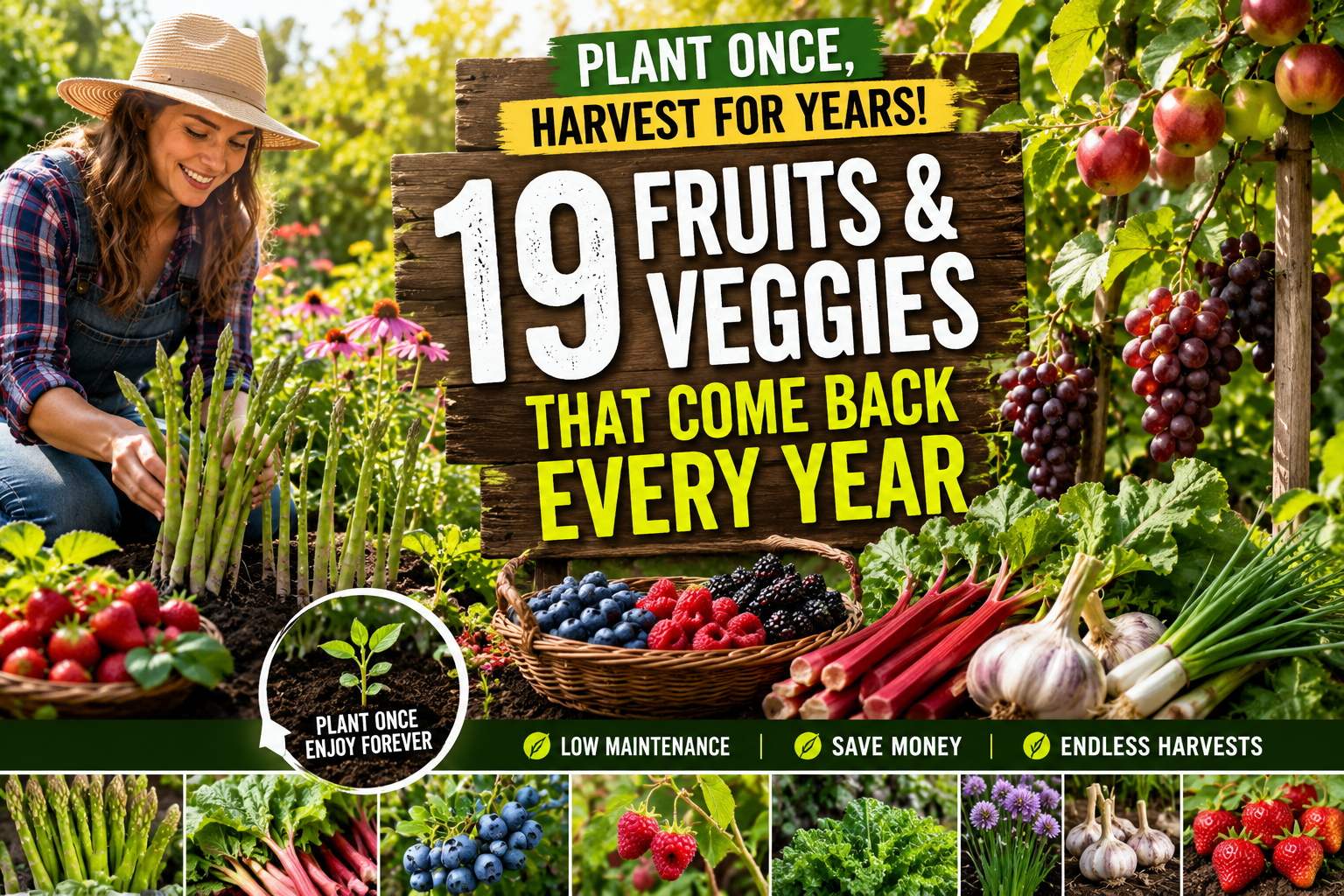
Imagine walking into your garden every spring and finding fresh vegetables, juicy berries, and flavorful herbs already growing—without having to replant everything from scratch.
Most gardeners spend countless hours sowing seeds and buying new plants every year. But what if some of your favorite fruits and vegetables could keep producing season after season with very little effort?
That’s exactly why perennial food plants are becoming increasingly popular among home gardeners.
Unlike annual crops that need replanting every year, perennial fruits and vegetables establish strong root systems and return year after year, often producing larger harvests as they mature.
The best part?
Many of these plants can continue producing for decades.
From sweet berries and crisp asparagus to fruit trees that can feed generations, these long-lasting crops help create a low-maintenance food garden that practically rewards you for years after a single planting.
Here are 19 incredible fruits and vegetables that keep coming back year after year.
1. Asparagus
If you’re willing to be patient, asparagus may be one of the best investments you can make in your garden.
Once established, an asparagus bed can produce tender spears every spring for 15 to 20 years or even longer.
The plants prefer:
- Full sun
- Well-drained soil
- Consistent moisture
While you’ll need to wait a couple of years before harvesting heavily, the reward is decades of fresh asparagus every spring.
2. Rhubarb
Rhubarb is one of the earliest crops to emerge after winter, often pushing through cool spring soil long before many other vegetables wake up.
Its thick red stalks are perfect for:
- Pies
- Jams
- Sauces
- Desserts
Rhubarb thrives in cooler climates and can remain productive for decades when given rich soil and enough space.
3. Strawberries
Few garden treats compare to picking warm strawberries directly from the plant.
Strawberry plants spread naturally through runners, creating larger patches every year.
Depending on the variety, you can enjoy:
- One large harvest in early summer
- Multiple harvests throughout the season
With proper care, a strawberry bed can continue producing for years.
4. Blueberries
Blueberries are among the longest-living fruit-producing plants for home gardens.
Many bushes remain productive for 20 to 50 years.
These antioxidant-rich berries thrive in:
- Acidic soil
- Full sunlight
- Consistent watering
Besides producing delicious fruit, blueberry bushes offer beautiful spring flowers and vibrant fall foliage.
5. Raspberries
Raspberry canes return every year and often spread naturally throughout the garden.
Once established, they provide abundant harvests of sweet berries each summer.
Popular choices include:
- Summer-bearing varieties
- Everbearing varieties
- Fall-bearing varieties
Regular pruning helps keep plants healthy and highly productive.
6. Blackberries
Blackberries are incredibly resilient and reward gardeners with large harvests of juicy fruit.
Many modern thornless varieties make harvesting easier than ever.
They grow best in:
- Full sun
- Fertile soil
- Areas with good air circulation
A mature blackberry patch can produce pounds of fruit every season.
7. Grapes
Grapevines are true long-term investments.
A healthy vine can continue producing fruit for 50 years or more.
Whether used for:
- Fresh eating
- Juice
- Jelly
- Homemade wine
Grapes offer reliable harvests and beautiful garden structure when grown on arbors or trellises.
8. Apple Trees
Apple trees are among the most rewarding perennial food plants.
Many varieties produce fruit for decades and become more productive as they mature.
For smaller gardens, dwarf apple trees provide excellent harvests while taking up less space.
9. Pear Trees
Pear trees often require very little maintenance once established.
They reward gardeners with:
- Fragrant spring blossoms
- Sweet summer fruit
- Attractive landscape value
Many pear trees remain productive for several decades.
10. Cherry Trees
Cherry trees combine beauty and productivity in one package.
Their stunning spring flowers are followed by delicious fruit that can be eaten fresh or used in recipes.
Both sweet and tart varieties perform well in home gardens.
11. Plum Trees
Plum trees adapt well to many climates and produce generous harvests of juicy fruit.
Their attractive spring blossoms make them valuable ornamental additions even before harvest season arrives.
12. Fig Trees
In warm climates, fig trees can become highly productive and surprisingly easy to maintain.
Their sweet fruits are packed with nutrients and can be enjoyed:
- Fresh
- Dried
- Preserved
Gardeners in colder regions often grow figs in containers and protect them during winter.
13. Artichokes
Artichokes bring a unique Mediterranean look to the garden while producing edible flower buds year after year.
They prefer:
- Full sun
- Rich soil
- Mild climates
In suitable growing zones, artichokes can remain productive for many seasons.
14. Horseradish
Horseradish may be one of the easiest perennial vegetables to grow.
Once planted, it often returns reliably each year.
The spicy roots are commonly harvested and used to create flavorful sauces and condiments.
15. Garlic
Although many gardeners grow garlic as an annual crop, leaving a few bulbs in the ground allows them to naturalize and return year after year.
Garlic is easy to grow and requires very little maintenance.
16. Kale
In regions with mild winters, kale can behave like a perennial.
Instead of dying after one season, it continues producing fresh leaves for months or even years.
Regular harvesting encourages steady new growth.
17. Sorrel
Sorrel is an underrated perennial green that deserves more attention.
Its tangy, lemon-like flavor adds brightness to:
- Salads
- Soups
- Sauces
The plant grows quickly and often produces fresh leaves from early spring until frost.
18. Chives
Chives are among the easiest perennial herbs to grow.
Every spring they emerge with fresh green shoots and eventually produce attractive purple flowers that pollinators love.
Their mild onion flavor makes them useful in countless recipes.
19. Mint
Mint is famous for its vigorous growth.
In fact, many gardeners grow it in containers to keep it from spreading too aggressively.
Once established, mint reliably returns every year and provides fresh leaves for:
- Tea
- Cocktails
- Desserts
- Cooking
Why Perennial Food Gardens Are So Popular
Planting perennial fruits and vegetables offers several major advantages:
Less Work Every Year
Instead of starting from seed each season, established plants simply return on their own.
Bigger Harvests Over Time
Many perennial crops become increasingly productive as their root systems mature.
Improved Soil Health
Deep roots help:
- Prevent erosion
- Improve soil structure
- Support beneficial organisms
Lower Gardening Costs
Plant once and harvest for years.
Many gardeners save significant money by investing in long-lasting food crops.
Greater Sustainability
Perennials require fewer resources, less water, and fewer inputs than many annual crops.
Tips for Growing Perennial Fruits and Vegetables Successfully
To get the best results:
- Choose sunny locations whenever possible.
- Improve soil with compost before planting.
- Mulch regularly to retain moisture.
- Prune fruit trees and berry bushes as needed.
- Give plants enough room to mature.
- Be patient with slower starters like asparagus and rhubarb.
Many of these crops take time to establish, but the payoff can last for decades.
Final Thoughts
If you want a garden that becomes more productive with every passing year, perennial fruits and vegetables are one of the smartest choices you can make.
From asparagus that returns every spring to blueberry bushes that produce for decades, these plants offer a reliable source of fresh food while reducing yearly gardening work.
Plant them once, care for them well, and you’ll enjoy harvests season after season—often for many years to come.