Growing your own vegetables is one of the most rewarding ways to enjoy fresh, healthy food straight from your backyard. But even experienced gardeners can make mistakes that lead to poor harvests, unhealthy plants, and unnecessary frustration.
The good news? Most vegetable gardening problems are easy to prevent once you know what to look for.
Here are 10 common vegetable gardening mistakes and simple ways to avoid them for a healthier, more productive garden.
1. Planting in the Wrong Location
One of the biggest mistakes new gardeners make is choosing a poor location for their vegetable garden.
Most vegetables need plenty of sunlight to grow and produce well. Planting in a shady spot can result in weak plants and disappointing harvests.
How to Avoid It:
- Choose a location that receives at least 6–8 hours of direct sunlight daily.
- Avoid low spots where water tends to collect.
- Protect plants from strong winds when possible.
A sunny location is one of the most important factors for gardening success.
2. Neglecting Soil Quality
Healthy vegetables start with healthy soil. Poor soil often lacks the nutrients and structure plants need to thrive.
How to Avoid It:
- Add compost or well-rotted manure before planting.
- Test your soil if possible.
- Improve drainage with organic matter.
- Mulch regularly to build soil health over time.
Rich, fertile soil produces stronger plants and larger harvests.
3. Overwatering or Underwatering
Many gardeners unknowingly stress their plants by watering too much or too little.
Too much water can lead to root rot and fungal diseases, while too little water causes stunted growth and poor yields.
How to Avoid It:
- Water deeply rather than frequently.
- Check soil moisture before watering.
- Use mulch to retain moisture.
- Water early in the morning whenever possible.
Consistent watering helps vegetables develop strong root systems.
4. Planting Too Close Together
It’s tempting to fit as many plants as possible into a small space, but overcrowding creates problems.
Crowded plants compete for sunlight, water, and nutrients while reducing airflow.
How to Avoid It:
- Follow spacing recommendations on seed packets.
- Thin seedlings when necessary.
- Use vertical gardening methods to save space.
Proper spacing helps prevent diseases and improves overall plant health.
5. Ignoring Companion Planting
Some plants naturally help each other grow, while others compete for resources.
Companion planting can reduce pests, improve pollination, and boost harvests.
Great Companion Plant Examples:
- Tomatoes and basil
- Carrots and onions
- Cucumbers and nasturtiums
- Lettuce and radishes
Planning plant combinations carefully can improve garden performance naturally.
6. Failing to Rotate Crops
Growing the same vegetables in the same spot year after year can deplete nutrients and encourage pests and diseases.
How to Avoid It:
- Rotate plant families annually.
- Move tomatoes, peppers, and potatoes to different beds each season.
- Keep records of previous plant locations.
Crop rotation is one of the simplest ways to maintain healthy soil.
7. Waiting Too Long to Deal With Pests
Small pest problems can quickly become major infestations if left untreated.
How to Avoid It:
- Inspect plants regularly.
- Encourage beneficial insects like ladybugs and lacewings.
- Remove damaged leaves promptly.
- Use natural pest controls when necessary.
Early intervention prevents serious damage and protects your harvest.
8. Overusing Fertilizer
More fertilizer doesn’t always mean better growth.
Excess fertilizer can cause lush leafy growth with very little fruit production and may even damage plant roots.
How to Avoid It:
- Follow fertilizer instructions carefully.
- Use compost whenever possible.
- Choose balanced organic fertilizers.
- Feed plants according to their specific needs.
A little fertilizer goes a long way.
9. Harvesting Too Late
Many vegetables taste best when harvested at the right stage of maturity.
Leaving produce on the plant too long can reduce quality and slow future production.
How to Avoid It:
- Harvest vegetables regularly.
- Pick zucchini when small and tender.
- Harvest beans frequently to encourage new pods.
- Check plants daily during peak season.
Regular harvesting often leads to bigger overall yields.
10. Giving Up After Early Failures
Every gardener experiences setbacks. Weather, pests, diseases, and unexpected challenges affect everyone at some point.
How to Avoid It:
- View mistakes as learning opportunities.
- Start with easy crops like lettuce, radishes, and bush beans.
- Keep a gardening journal.
- Continue experimenting and improving each season.
The most successful gardeners aren’t those who never fail—they’re the ones who keep learning.
Final Thoughts
Vegetable gardening is a skill that improves with experience. By avoiding these common mistakes, you’ll enjoy healthier plants, larger harvests, and a more enjoyable gardening journey.
Remember, every season offers a chance to learn something new. Start small, pay attention to your plants, and don’t be afraid to make adjustments along the way.
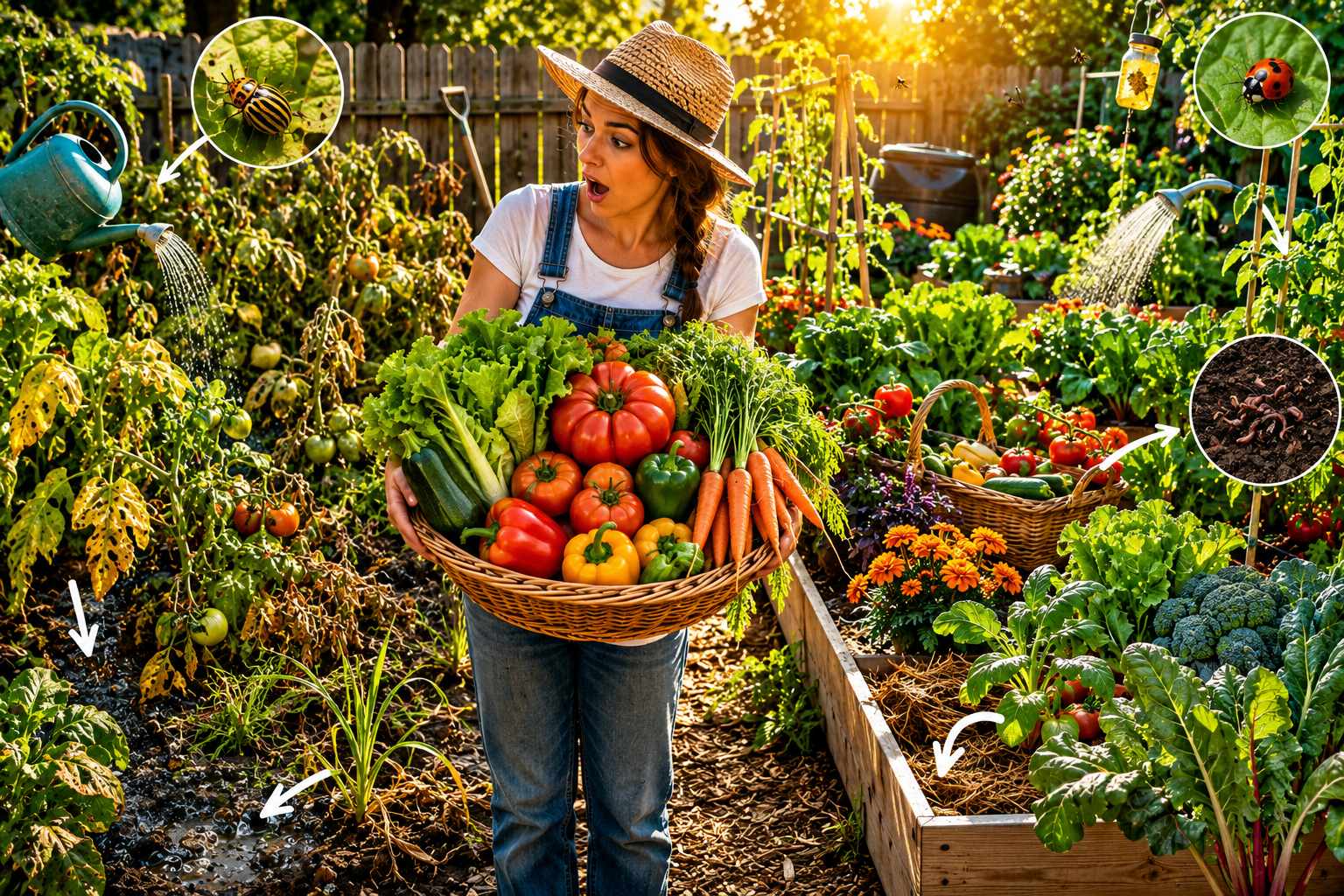
With proper planning, healthy soil, consistent care, and a little patience, you’ll be harvesting baskets of fresh vegetables before you know it.