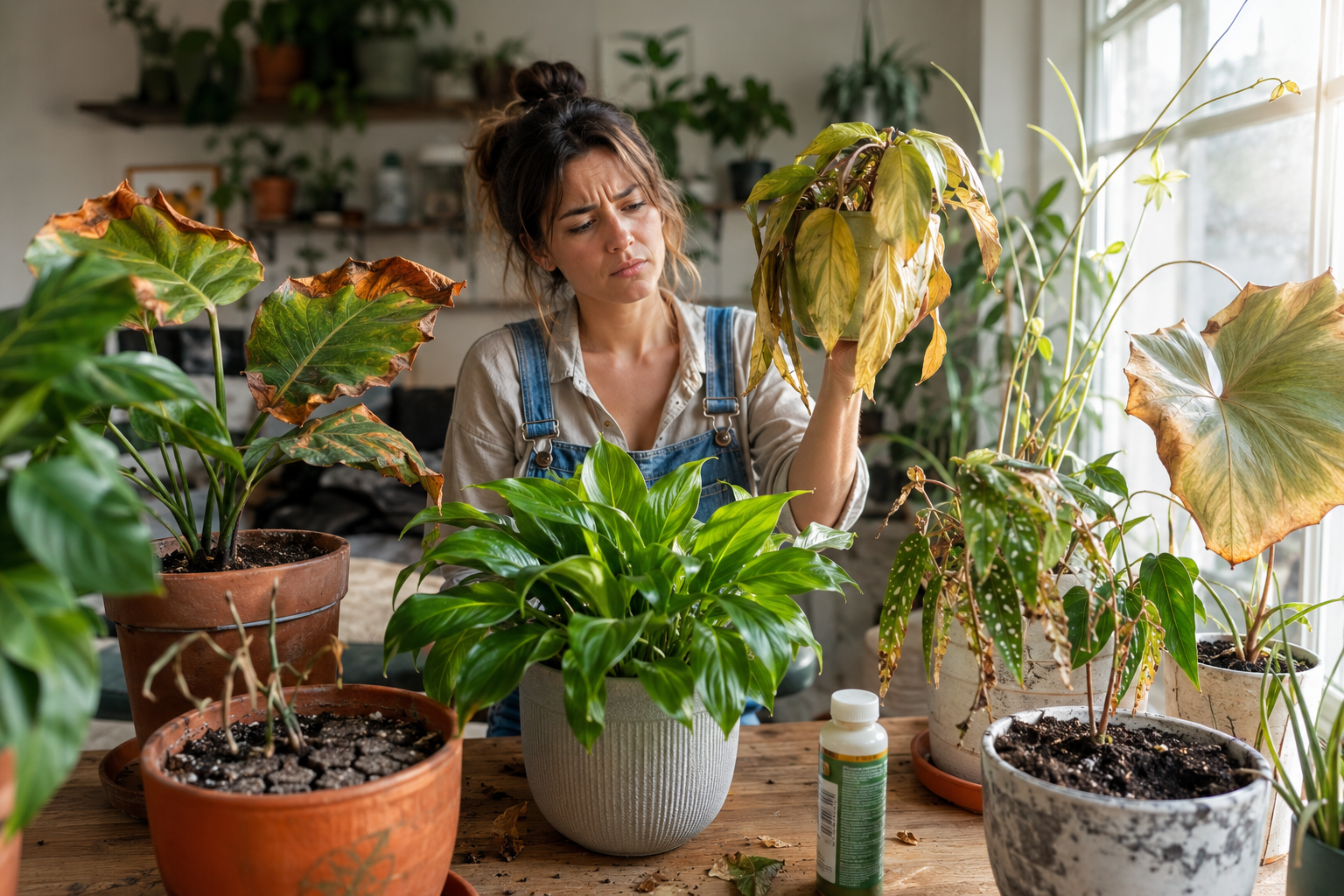
Houseplants can transform a home, adding beauty, color, and a sense of calm to any space. But if your indoor plants keep turning yellow, dropping leaves, or slowly declining no matter what you do, you’re not alone.
The good news is that most houseplant problems come down to a few common mistakes. Once you identify the cause, it’s often easy to correct and get your plants back on track.
Here are seven of the most common reasons houseplants struggle—and exactly how to fix them.
1. Overwatering: The Most Common Houseplant Killer
Many plant owners assume that watering more frequently means healthier plants. In reality, overwatering is responsible for more houseplant deaths than almost any other issue.
When soil stays constantly wet, roots can’t access enough oxygen. Eventually, root rot develops, causing plants to decline rapidly.
Signs of Overwatering
- Yellowing leaves
- Wilting despite moist soil
- Soft or mushy stems
- Mold growing on the soil surface
- Foul-smelling roots
How to Fix It
- Check soil moisture before watering.
- Allow the top inch or two of soil to dry out between waterings for most plants.
- Use pots with drainage holes.
- Empty saucers after watering.
- Repot plants suffering from root rot into fresh soil.
Tip: Most houseplants prefer slightly dry soil over constantly wet conditions.
2. Underwatering Can Be Just as Harmful
While overwatering gets most of the attention, underwatering can also cause serious stress.
Plants need consistent moisture to support growth, nutrient transport, and photosynthesis.
Signs of Underwatering
- Crispy leaf edges
- Wilting leaves
- Soil pulling away from pot edges
- Slow growth
- Dry, compacted soil
How to Fix It
- Create a regular watering schedule.
- Water deeply rather than giving small daily amounts.
- Check moisture levels regularly.
- Consider self-watering containers for thirsty plants.
If the soil has become extremely dry, soak the entire pot in water for 10–15 minutes to rehydrate the root ball.
3. Incorrect Lighting Conditions
Every houseplant has specific lighting needs. Too much sunlight can scorch leaves, while too little light weakens growth.
Signs of Too Much Light
- Brown, crispy patches
- Sunburned leaves
- Bleached foliage
Signs of Too Little Light
- Leggy stems
- Small leaves
- Pale growth
- Slow development
How to Fix It
Match plants to the correct location:
Bright Light Plants
- Succulents
- Cacti
- Fiddle-leaf figs
- Citrus trees
Medium Light Plants
- Philodendrons
- Monstera
- Peace lilies
Low Light Plants
- Snake plants
- ZZ plants
- Pothos
Rotate plants every few weeks to encourage even growth.
4. Using the Wrong Soil
Different plants require different growing conditions.
Using heavy soil for succulents or fast-draining soil for moisture-loving plants can create ongoing problems.
Signs of Poor Soil
- Water pooling on the surface
- Constant sogginess
- Stunted growth
- Yellowing leaves
- Mold growth
How to Fix It
Choose a soil mix suited to your plant:
- Succulents: cactus mix
- Orchids: bark-based mix
- Tropical plants: rich potting soil with perlite
- African violets: specialized violet mix
Repot plants every one to two years to refresh nutrients and improve root health.
5. Hidden Pest Infestations
Tiny pests often go unnoticed until plants begin showing serious damage.
Common houseplant pests include:
- Spider mites
- Aphids
- Fungus gnats
- Mealybugs
- Scale insects
Warning Signs
- Sticky residue on leaves
- Tiny moving insects
- White cotton-like clusters
- Fine webbing
- Yellowing foliage
How to Fix It
- Isolate affected plants immediately.
- Spray with neem oil or insecticidal soap.
- Wipe leaves with a damp cloth.
- Inspect plants regularly to catch infestations early.
Healthy plants are generally more resistant to pest attacks.
6. Fertilizer Problems
Plants need nutrients to grow, but both over-fertilizing and under-fertilizing can cause issues.
Signs of Over-Fertilizing
- Brown leaf tips
- Salt buildup on soil
- Weak growth
- Root burn
Signs of Under-Fertilizing
- Pale leaves
- Slow growth
- Small foliage
- Reduced vigor
How to Fix It
- Feed during active growth periods.
- Use a balanced liquid fertilizer.
- Follow package directions carefully.
- Dilute fertilizer to half strength if unsure.
For many houseplants, less fertilizer is often better than too much.
7. Low Humidity Levels
Many popular houseplants originate from tropical environments where humidity remains consistently high.
Indoor air—especially during winter—can be much drier than these plants prefer.
Signs of Low Humidity
- Brown leaf edges
- Curling leaves
- Leaf drop
- Stunted growth
How to Fix It
Increase humidity by:
- Using a humidifier
- Grouping plants together
- Placing pots on pebble trays
- Keeping tropical plants in naturally humid rooms
Plants like calatheas, ferns, and prayer plants often show dramatic improvement when humidity levels increase.
Quick Houseplant Health Checklist
If your plants aren’t thriving, check these seven areas first:
✅ Watering habits
✅ Light levels
✅ Soil quality
✅ Pest activity
✅ Fertilizer use
✅ Humidity levels
✅ Drainage
In most cases, correcting just one or two of these factors can completely transform the health of your indoor plants.
Final Thoughts
Houseplants don’t usually die without warning. Yellow leaves, wilting, browning edges, slow growth, and pest activity are all signs that something needs adjustment.
By understanding these seven common mistakes and making a few simple changes, you can create the ideal environment for healthy, thriving houseplants all year long.
With the right balance of water, light, soil, nutrients, and humidity, even the most challenging houseplants can become beautiful, long-lasting additions to your home. 🌿