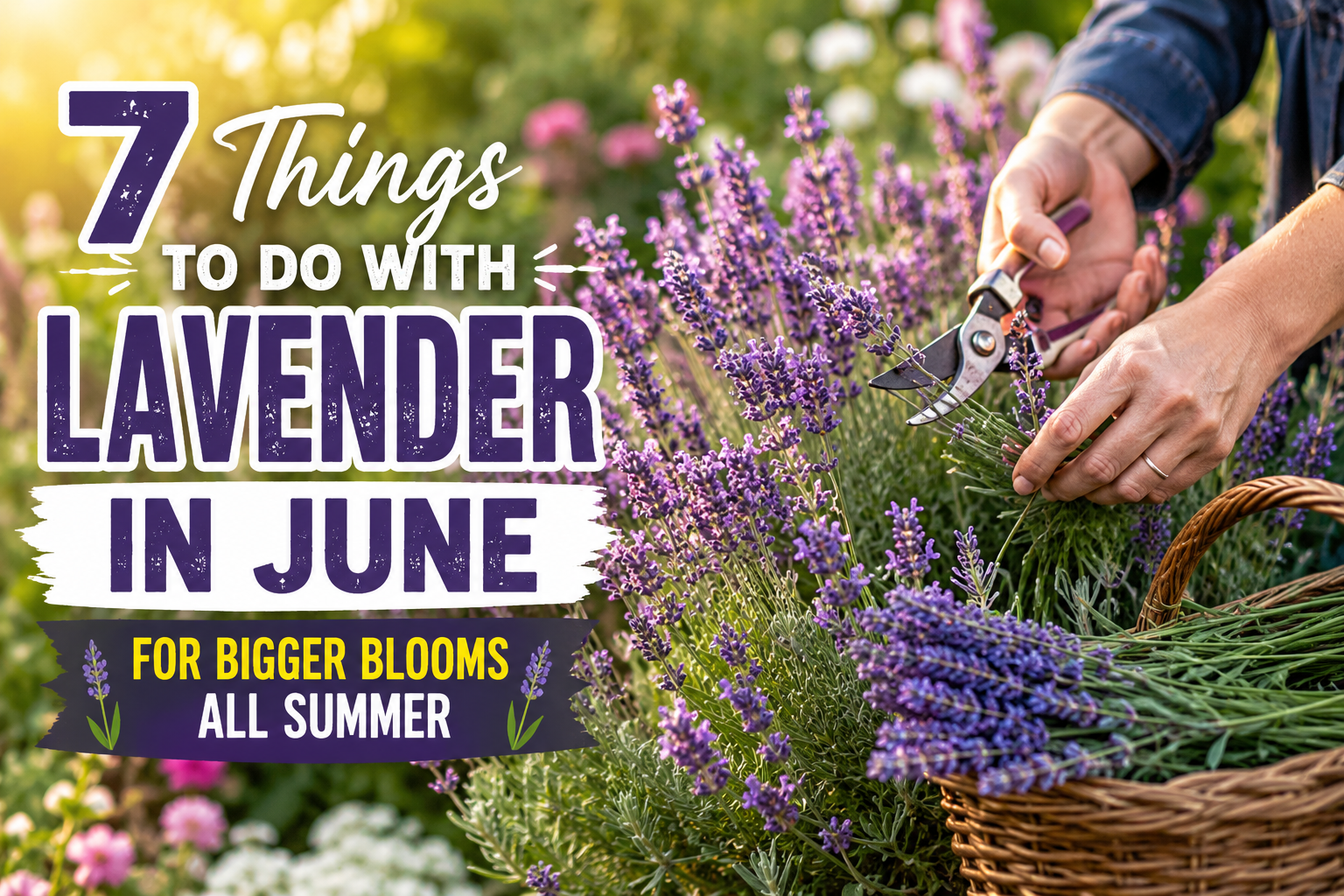
Lavender may have a reputation for being one of the easiest plants to grow, but June is actually a make-or-break month for its long-term health.
Many gardeners unknowingly damage their lavender during early summer by giving it exactly what they think it needs—more water, more fertilizer, and too much attention.
The truth is that lavender thrives when it’s treated a little differently than most garden plants.
As temperatures begin to rise and flower spikes start developing, lavender shifts into one of its most active growth periods of the year. What you do now can determine whether your plant becomes a compact mound covered in fragrant blooms—or a woody, floppy shrub that struggles through the rest of the season.
If you want stronger growth, richer fragrance, and more flowers this summer, these seven simple June tasks can make a huge difference.
1. Give Lavender More Sunlight—Not More Water
When summer heat arrives, many gardeners instinctively reach for the watering can.
With lavender, that’s often the wrong move.
Lavender evolved in the dry, rocky regions of the Mediterranean, where intense sunlight and limited rainfall are the norm. In fact, one of the best things you can do in June is make sure your plant gets as much sunlight as possible.
Strong sunlight helps lavender:
- Produce more flowers
- Develop stronger stems
- Increase essential oil production
- Intensify its signature fragrance
- Maintain a compact shape
For best results, lavender should receive at least 6 to 8 hours of direct sunlight every day.
Why Overwatering Is Lavender’s Biggest Enemy
Unlike many garden plants, lavender prefers slightly dry soil.
Constant moisture around the roots can lead to:
- Root rot
- Yellowing leaves
- Fungal diseases
- Weak growth
- Reduced flowering
Established lavender plants are surprisingly drought-tolerant and often perform better when allowed to dry out between waterings.
If you’re unsure whether to water, check the soil first. If it still feels moist a few inches below the surface, wait another day or two.
2. Lightly Prune Fading Flower Stems
June is the perfect time for gentle maintenance pruning.
As early flower spikes begin fading, removing them helps the plant redirect energy into fresh growth and future blooms.
Regular shaping during summer can help:
- Keep plants compact
- Prevent leggy growth
- Encourage bushier foliage
- Improve overall appearance
- Promote additional flowering in some varieties
The Golden Rule of Lavender Pruning
Never cut deeply into old woody stems.
Lavender does not regenerate well from mature wood. Once a section becomes brown and woody, new growth may never emerge from that area.
Instead, trim only:
- Faded flower spikes
- Soft green growth
- Recently developed stems
Think of June pruning as a light haircut rather than a major trim.
This small habit helps lavender maintain a fuller, healthier shape year after year.
3. Improve Airflow Around the Plant
One of the most overlooked aspects of lavender care is airflow.
Lavender loves dry, moving air.
When plants become crowded or surrounded by weeds, humidity gets trapped around the stems and leaves. This creates the perfect environment for fungal problems to develop.
Poor airflow can contribute to:
- Powdery mildew
- Stem rot
- Yellow foliage
- Reduced blooming
- General plant stress
Simple Ways to Improve Air Circulation
Take a few minutes in June to:
- Remove weeds around the base
- Thin overcrowded neighboring plants
- Avoid piling mulch against stems
- Maintain proper spacing between plants
Good airflow becomes even more important in humid regions where summer moisture tends to linger.
4. Skip the Heavy Fertilizer
If your goal is bigger blooms and stronger fragrance, resist the urge to feed lavender heavily.
This surprises many gardeners because most flowering plants benefit from extra nutrients.
Lavender is different.
Too much fertilizer—especially high-nitrogen products—often creates:
- Excessive leafy growth
- Weak stems
- Reduced flowering
- Less fragrant blooms
Why Lavender Loves Lean Soil
In its native habitat, lavender grows in rocky, nutrient-poor soil.
These tougher growing conditions encourage the plant to focus on producing concentrated oils and flowers rather than excessive foliage.
In many cases, lavender grown in poor soil actually smells stronger and blooms better than plants grown in rich garden beds.
Sometimes less truly is more.
5. Harvest Lavender at the Perfect Time
For many gardeners, June marks the beginning of lavender harvest season.
Harvest timing plays a huge role in the quality of dried flowers, essential oils, and fragrance retention.
The ideal moment to harvest is when roughly one-third to one-half of the flower buds have opened.
At this stage:
- Fragrance is strongest
- Essential oil levels are highest
- Color remains vibrant
- Drying quality improves
How to Harvest Lavender Properly
For the best results:
- Harvest during the morning
- Wait until dew has evaporated
- Cut before the hottest part of the day
- Gather stems into small bundles
Freshly harvested lavender can be used for:
- Dried bouquets
- Sachets
- Homemade crafts
- Bath products
- Herbal projects
- Culinary recipes (certain varieties)
Many experienced growers consider morning harvests the secret to preserving maximum fragrance.
6. Watch for Humidity Stress
Lavender thrives in dry climates but often struggles when humidity levels climb.
Even healthy plants can experience problems during humid June weather.
Signs of humidity stress include:
- Browning foliage
- Slow growth
- Fungal infections
- Reduced flowering
- Soft or collapsing stems
How to Protect Lavender During Humid Weather
If you live in a humid region:
- Water only when necessary
- Avoid overhead watering
- Improve drainage around roots
- Use gravel instead of heavy mulch
- Grow lavender in raised beds if possible
Raised planting areas help excess moisture drain away quickly and often make a dramatic difference in plant health.
7. Deadhead Spent Blooms for More Flowers
One of the easiest ways to extend lavender’s beauty throughout summer is deadheading.
Removing old flower spikes encourages the plant to continue investing energy into growth rather than seed production.
Benefits of deadheading include:
- Longer flowering periods
- Tidier appearance
- More compact growth
- Increased vigor
- Potential reblooming in some varieties
Why This Simple Task Works
Once flowers begin producing seeds, the plant naturally shifts its priorities.
By removing spent blooms, you encourage lavender to redirect resources toward:
- New flower buds
- Healthy foliage
- Root development
- Overall plant strength
It only takes a few minutes but can noticeably improve the plant’s appearance for weeks.
The Soil Secret Most Lavender Growers Know
If lavender could choose its ideal home, it would pick soil that many other plants would hate.
Lavender grows best in:
- Sandy soil
- Gravelly soil
- Fast-draining soil
- Slightly alkaline conditions
Heavy clay soil is often the biggest challenge because it traps moisture around the roots.
If drainage is poor, consider mixing in:
- Coarse sand
- Gravel
- Small stones
Improving drainage often solves more lavender problems than any fertilizer ever could.
Why Lavender Actually Loves Summer Heat
Unlike many flowering plants that struggle during hot weather, lavender often becomes more fragrant as temperatures rise.
Warm sunshine helps stimulate the production of aromatic oils responsible for its famous scent.
This is one reason lavender fields in Mediterranean regions produce some of the world’s most intensely fragrant flowers.
Heat isn’t the enemy.
Too much moisture usually is.
Common Lavender Mistakes to Avoid in June
Before summer gets into full swing, make sure you’re not accidentally making these common mistakes:
- Watering too frequently
- Applying heavy fertilizer
- Growing lavender in deep shade
- Pruning into old woody stems
- Using thick mulch around the crown
- Allowing weeds to crowd the plant
Most lavender problems can be traced back to one simple issue: giving the plant more care than it actually needs.
Final Thoughts
June is one of the most important months in the lavender growing season.
A few simple adjustments now can lead to stronger growth, richer fragrance, healthier roots, and a spectacular display of blooms throughout summer.
Give your lavender plenty of sunshine, avoid excessive watering, improve airflow, and resist the temptation to overfeed it.
Often the healthiest lavender plants are the ones gardeners interfere with the least.
Treat lavender the way nature intended, and it will reward you with months of color, fragrance, and beauty.