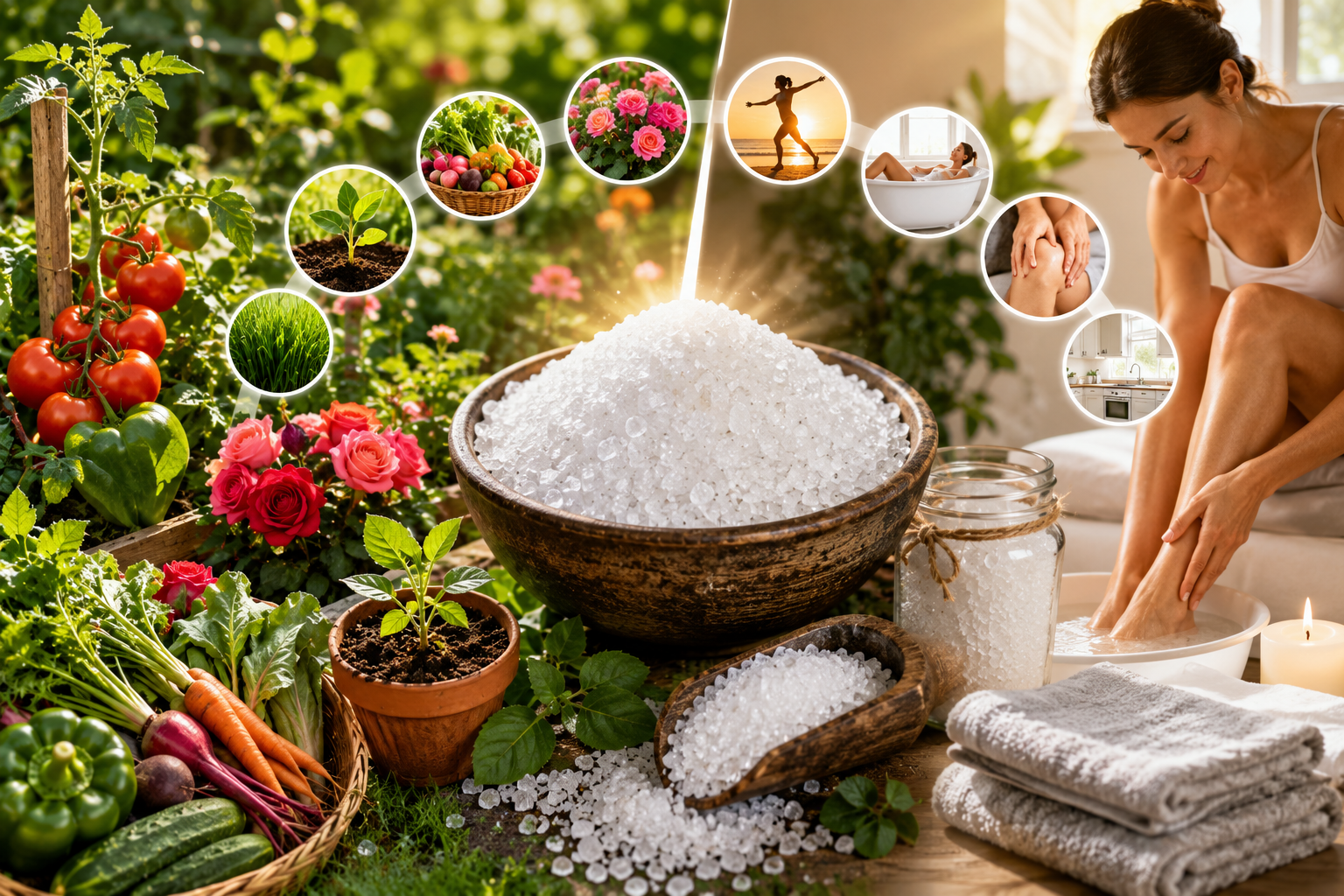
One inexpensive household product can help your plants grow better, freshen your home, soothe tired muscles, and even tackle stubborn cleaning jobs.
That product is Epsom salt.
For decades, gardeners and homeowners have relied on Epsom salt as a simple, affordable solution for dozens of everyday problems. Known scientifically as magnesium sulfate, Epsom salt contains two naturally occurring minerals that play important roles in both plant health and everyday household uses.
While many people only associate Epsom salt with relaxing baths, its usefulness extends far beyond the bathroom.
From greener gardens and healthier vegetables to cleaner surfaces and soothing foot soaks, here are 22 practical ways Epsom salt can earn a permanent place in your home and garden.
What Makes Epsom Salt So Useful?
Unlike table salt, Epsom salt is made up of magnesium and sulfur—two essential elements used by plants and the human body.
Magnesium supports:
- Muscle function
- Nerve health
- Chlorophyll production in plants
- Energy transfer
Sulfur helps with:
- Protein formation
- Root development
- Plant growth
- Soil health
Because of this unique combination, Epsom salt has become one of the most versatile products available.
Epsom Salt Uses Around the Home
1. Soothe Tired Muscles After a Long Day
One of the most popular uses for Epsom salt is relieving muscle discomfort.
A warm Epsom salt bath may help:
- Relax sore muscles
- Ease stiffness
- Reduce post-workout discomfort
- Promote overall relaxation
How to Use It
Add 1–2 cups of Epsom salt to a warm bath and soak for about 20 minutes.
2. Create a Relaxing Stress-Relief Bath
Few things feel better after a stressful day than a hot bath.
Many people use Epsom salt baths to unwind, relax, and prepare for better sleep.
Extra Tip
Add a few drops of lavender essential oil for a spa-like experience.
3. Exfoliate Rough Skin Naturally
The coarse texture of Epsom salt works as a gentle exfoliator.
It helps remove:
- Dead skin cells
- Dry patches
- Rough elbows
- Callused feet
Simple Scrub Recipe
Mix Epsom salt with coconut oil or olive oil and massage gently onto damp skin.
4. Help Reduce the Appearance of Blemishes
Many people use diluted Epsom salt as part of their skincare routine.
Its cleansing properties may help remove excess oils and impurities from the skin.
5. Soothe Minor Skin Irritations
Epsom salt baths are often used to calm:
- Itchy skin
- Mild sunburn discomfort
- Bug bite irritation
- General skin inflammation
Cool water soaks are especially soothing during summer.
6. Add Volume to Flat Hair
Epsom salt can help remove excess oil buildup that weighs hair down.
Try This
Mix equal parts conditioner and Epsom salt, apply to damp hair, leave briefly, then rinse thoroughly.
7. Refresh Tired Feet
After standing all day, an Epsom salt foot soak feels incredibly refreshing.
Benefits may include:
- Reduced foot odor
- Less swelling
- Improved comfort
8. Scrub Pots and Pans Naturally
Burnt-on food doesn’t always require harsh chemicals.
The gritty texture of Epsom salt helps loosen stubborn residue from cookware.
9. Clean Tile and Grout
Bathroom grime and stained grout can be difficult to remove.
A mixture of Epsom salt and dish soap creates an effective scrubbing paste.
10. Freshen Laundry
Many homeowners add Epsom salt to laundry routines to help:
- Reduce odors
- Soften fabrics
- Freshen clothing
11. Create a Detox Bath
Epsom salt baths remain popular among people seeking a relaxing self-care routine.
A warm soak encourages relaxation while helping the body recover from daily stress.
12. Occasional Digestive Use
Food-grade Epsom salt has historically been used as a short-term saline laxative.
Important: Always follow package directions and consult a healthcare professional before ingesting Epsom salt.
Epsom Salt Uses in the Garden
This is where Epsom salt becomes especially popular among gardeners.
Many plants benefit from magnesium, particularly in soils where deficiencies exist.
13. Encourage Stronger Plant Growth
Magnesium plays a key role in photosynthesis.
When plants have adequate magnesium, they often produce:
- Healthier foliage
- Stronger stems
- Improved growth
Garden Mix
Dissolve 1 tablespoon of Epsom salt per gallon of water and apply every few weeks.
14. Help Correct Yellow Leaves
Yellowing between leaf veins may sometimes indicate magnesium deficiency.
Plants commonly affected include:
- Tomatoes
- Peppers
- Roses
- Citrus trees
15. Boost Vegetable Production
Many gardeners use Epsom salt on fruiting crops.
Popular plants include:
- Tomatoes
- Peppers
- Cucumbers
- Squash
Proper nutrition often supports stronger flowering and fruit development.
16. Deter Slugs and Snails
The rough texture of Epsom salt may discourage some crawling garden pests.
Sprinkle lightly around vulnerable plants.
17. Promote a Greener Lawn
Magnesium contributes to chlorophyll production, which helps grass maintain a rich green color.
A diluted spray can be applied periodically during the growing season.
18. Support Seedling Development
Young plants benefit from healthy nutrient availability.
Some gardeners mix small amounts of Epsom salt into planting areas to provide magnesium during early growth.
19. Encourage More Vibrant Roses
Rose enthusiasts have used Epsom salt for generations.
Benefits may include:
- Stronger growth
- Improved flowering
- Richer foliage color
Apply around the base of established plants during spring.
20. Improve Potted Plant Health
Container plants often exhaust nutrients more quickly than plants grown in the ground.
Occasional Epsom salt applications may help replenish magnesium levels.
21. Support Soil Nutrient Balance
Epsom salt provides magnesium and sulfur without significantly altering soil pH.
This makes it useful when specific nutrient deficiencies are present.
22. Revive Struggling Plants
Plants showing signs of nutrient stress sometimes respond positively when magnesium deficiencies are corrected.
Symptoms may include:
- Pale leaves
- Weak growth
- Reduced flowering
A diluted Epsom salt solution can provide a quick nutrient boost when needed.
Common Epsom Salt Mistakes to Avoid
Even beneficial products can be overused.
Avoid:
❌ Applying too frequently
❌ Using it on every plant automatically
❌ Assuming every yellow leaf is caused by magnesium deficiency
❌ Replacing proper fertilization entirely
More is not always better.
Is Epsom Salt Really Worth Keeping Around?
For many homeowners and gardeners, absolutely.
A single inexpensive bag of Epsom salt can help with:
- Gardening
- Cleaning
- Personal care
- Relaxation
- Plant nutrition
- Household maintenance
That’s why generations of gardeners continue to keep it stocked on a shelf in the garage, garden shed, or laundry room.
Whether you’re growing tomatoes, soaking tired feet, cleaning stubborn grime, or caring for roses, Epsom salt remains one of the most versatile products you can own.