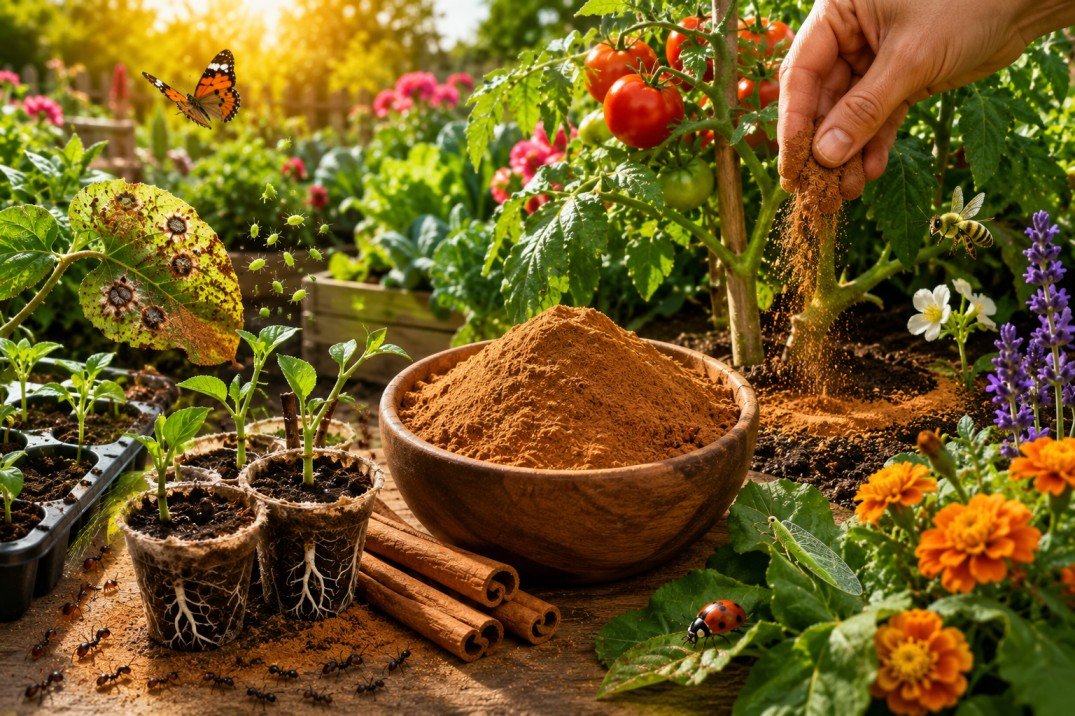
Most gardeners keep cinnamon in the kitchen.
What many don’t realize is that this ordinary spice can become one of the most useful tools in the entire garden.
From stopping fungal diseases to repelling pests and helping plant cuttings grow stronger roots, cinnamon offers surprising benefits without relying on harsh chemicals.
It’s inexpensive, easy to find, safe around most plants, and incredibly simple to use.
If you’re looking for a natural way to boost plant health while reducing your dependence on synthetic products, cinnamon deserves a permanent place in your gardening routine.
Here are eight powerful ways cinnamon can help transform your garden.
1. Stop Fungal Diseases Before They Destroy Seedlings
One of the most frustrating problems for gardeners is watching healthy seedlings suddenly collapse.
This common issue, known as damping-off disease, is caused by fungi that attack young plants before they become established.
A light dusting of cinnamon on the soil surface can help discourage fungal growth and create a healthier environment for seedlings.
How to Use It
- Sprinkle cinnamon lightly over seed-starting soil
- Dust around newly emerged seedlings
- Reapply after heavy watering if needed
Many gardeners swear by this simple trick because it costs almost nothing and takes only seconds to apply.
2. Create a Natural Pest Barrier
Certain insects dislike the strong scent and texture of cinnamon.
While it won’t eliminate severe infestations, it can help discourage common garden pests from settling around your plants.
Cinnamon is often used against:
- Ants
- Aphids
- Fungus gnats
- Small crawling insects
How to Use It
Sprinkle a ring of cinnamon around:
- Seedlings
- Potted plants
- Raised beds
- Greenhouse benches
The strong aroma disrupts insect activity and encourages many pests to move elsewhere.
3. Prevent Mold and Mildew Naturally
Warm temperatures and humidity create perfect conditions for mold and mildew.
Once these problems appear, they can spread quickly through a garden.
Cinnamon contains natural compounds that may help suppress fungal growth and reduce the conditions that encourage mold development.
Best Places to Apply
- Damp potting soil
- Greenhouses
- Seed trays
- Indoor plant containers
A small amount can go a surprisingly long way.
4. Help Plant Cuttings Develop Stronger Roots
Many gardeners spend money on commercial rooting powders.
Cinnamon offers a simple natural alternative that may help protect fresh cuttings while roots begin forming.
Because cuttings are vulnerable to fungal infections, cinnamon acts as a protective barrier during the critical rooting stage.
How to Use It
- Take your cutting.
- Dip the cut end into cinnamon powder.
- Plant in moist growing medium.
Many gardeners combine cinnamon with honey for additional protection and moisture retention.
5. Improve Soil Conditions Around Plants
Healthy soil is the foundation of a productive garden.
Some gardeners use cinnamon around plant bases to help discourage harmful organisms while creating a cleaner growing environment.
Simple Application
- Mix a small amount into planting holes
- Sprinkle lightly around plant stems
- Add to container gardens
While cinnamon isn’t a fertilizer, it can complement healthy soil management practices.
6. Protect Plants After Pruning or Damage
Whenever branches are cut, plants become vulnerable to disease and infection.
Applying cinnamon to fresh cuts may help create a protective barrier while the wound heals naturally.
Great For
- Fruit trees
- Roses
- Shrubs
- Houseplants
- Damaged stems
A light dusting is usually all that’s needed.
7. Make Greenhouses Healthier
Greenhouses create ideal growing conditions for plants—but unfortunately they also create ideal conditions for mold, mildew, and pests.
Many gardeners use cinnamon as part of their greenhouse maintenance routine.
Where It Helps
- Seedling trays
- Potting benches
- Damp corners
- Entry points where insects enter
Keeping fungal issues under control early can prevent major outbreaks later.
8. Keep Ants Out of Garden Beds and Containers
Ants themselves don’t usually damage plants.
The bigger problem is that ants often protect aphids and other sap-sucking insects because they feed on the sweet residue these pests produce.
Reducing ant activity can indirectly reduce aphid problems as well.
How to Create an Ant Barrier
- Sprinkle cinnamon around pots
- Apply along garden borders
- Use near ant trails
- Reapply after heavy rain
Many gardeners notice ants avoiding cinnamon-treated areas altogether.
Why So Many Gardeners Love Using Cinnamon
Unlike many commercial products, cinnamon offers several benefits at once.
It may help:
✔ Discourage pests
✔ Reduce fungal problems
✔ Protect seedlings
✔ Support plant cuttings
✔ Help wounds heal
✔ Improve greenhouse conditions
✔ Reduce mold and mildew
✔ Create healthier growing environments
And perhaps the best part?
Most people already have it sitting in their kitchen cabinet.
Common Mistakes to Avoid
Even natural products can be overused.
Avoid these common errors:
- Applying thick layers that smother soil
- Using cinnamon as a replacement for proper plant care
- Expecting instant results
- Ignoring underlying drainage or humidity issues
Cinnamon works best as part of a complete gardening strategy rather than a miracle cure.
The Bottom Line
Cinnamon may be one of the most underrated gardening tools available.
For just a few dollars, this everyday kitchen spice can help protect seedlings, discourage pests, reduce fungal issues, and support healthier plant growth naturally.
The next time you’re reaching for cinnamon in the pantry, consider taking a little outside too.
Your garden might benefit more than you expect.