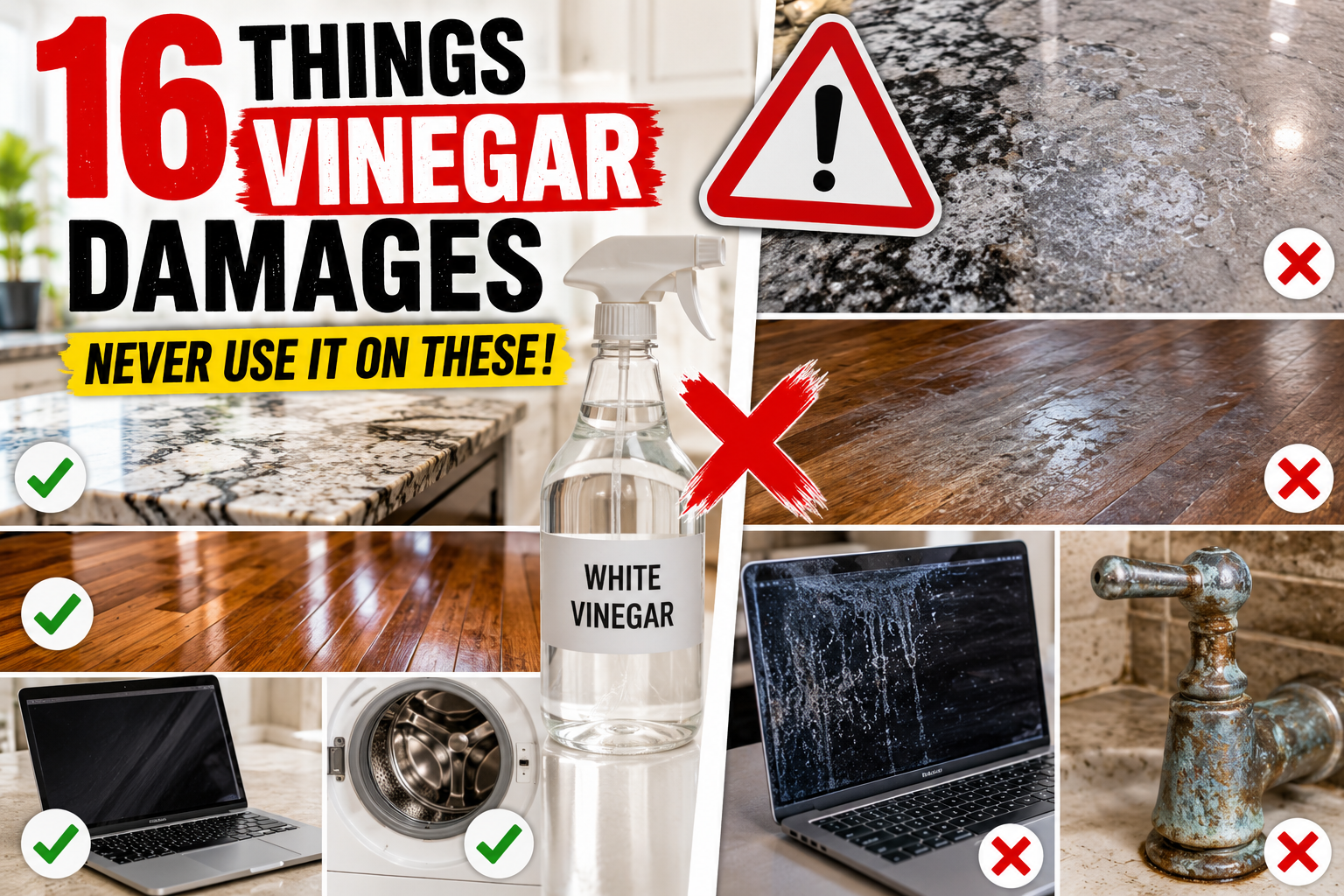
Vinegar has built a reputation as a go-to cleaning miracle. It’s affordable, natural, and surprisingly effective on many everyday messes—so it’s easy to assume it’s safe for everything.
But that’s where most people go wrong.
The truth is, vinegar’s strong acidity can quietly destroy certain surfaces and household items over time. What seems like a smart cleaning hack today could lead to expensive damage tomorrow.
Before you reach for that bottle again, take a look at this list—you might be surprised by what shouldn’t come anywhere near vinegar.
1) Natural Stone Countertops
Natural stone countertops like marble and granite add a premium look to any kitchen—but they’re far more delicate than they appear.
Vinegar’s acidic nature slowly eats away at the surface, causing dull patches, etching, and tiny pits that become more noticeable over time. Once the damage is done, it’s difficult (and often costly) to fix.
Instead, stick with a gentle solution like mild dish soap and warm water for daily cleaning. For deeper cleaning, use a product specifically designed for natural stone.
It’s a simple switch—but one that keeps your countertops looking polished and new for years.
2) Hardwood Floors
Hardwood floors instantly elevate a home—but they’re not as tough as they look. One common mistake? Cleaning them with vinegar.
Because vinegar is acidic, it slowly breaks down the protective finish on hardwood. Over time, this leaves floors looking dull, faded, and worn out much faster than expected.
A better option is a pH-neutral cleaner designed specifically for wood floors. For everyday cleaning, a lightly damp mop does the job perfectly. Just be careful not to overdo the moisture—too much water can seep in and cause the wood to swell or warp.
3) Granite and Marble Surfaces
Granite and marble are often seen as durable, high-end surfaces—but when it comes to acidic cleaners, they’re surprisingly vulnerable.
Using vinegar can strip away the protective sealant, leaving the surface dull and exposed. Once that barrier is gone, stains and damage can happen much more easily.
Instead, stick with a simple mix of warm water and mild dish soap. It’s safe, effective, and helps preserve that smooth, polished finish for years to come.
4) Waxed Furniture
Waxed furniture has a soft, protective coating that gives it that rich, polished look—but vinegar can destroy it in no time.
The acid breaks down the wax layer, leaving the surface patchy, dull, and unprotected. Over time, this can even expose the wood underneath to moisture and damage.
For quick cleaning, use a slightly damp cloth and dry the surface immediately. To maintain that beautiful finish, reapply wax every few months depending on usage.
It’s a small effort that makes a big difference in keeping your furniture looking its best.
5) Cast Iron Cookware
Cast iron pans are built to last—but vinegar can ruin them faster than you think.
The acidity strips away the seasoning, which is the protective layer that keeps your pan naturally non-stick and resistant to rust. Even a quick soak can weaken that layer and leave your pan vulnerable.
For cleaning, keep it simple. Use hot water, a stiff brush, or coarse salt with a little oil for tougher residue. If needed, re-season the pan afterward. With proper care, a cast iron skillet can last a lifetime—so it’s worth doing it right.
6) Electronic Screens and Devices
It might be tempting to use vinegar to clean smudges—but your screens will pay the price.
Phones, laptops, TVs, and tablets all have a special coating that resists fingerprints and oils. Vinegar can break down this layer, leaving your screen more prone to smudges, scratches, and permanent damage.
Instead, use a clean microfiber cloth for everyday cleaning. For deeper cleaning, go with a screen-safe solution designed specifically for electronics. A small precaution now can save you from an expensive replacement later.
7) Pearl Jewelry
Pearls may look elegant and durable, but they’re actually very delicate.
Vinegar is especially harmful here. Its acid can slowly erode the pearl’s surface, leaving it dull, rough, and damaged beyond repair.
To keep pearls looking their best, gently wipe them with a soft, damp cloth after wearing. Store them separately to avoid scratches, and keep them away from perfumes and harsh chemicals.
Simple care goes a long way in preserving their natural shine.
8) Egg Stains and Spills
Cleaning egg messes with vinegar is a mistake most people don’t realize they’re making.
The acid in vinegar causes egg proteins to tighten and bind together, which actually makes the stain stick harder to the surface. In other words, you’re making the mess worse.
The fix is easy: always start with cold water. Rinse the area thoroughly, then use a small amount of dish soap to lift the residue. Avoid hot water or vinegar, or you’ll end up locking the stain in place.
9) Stone Tile Floors
Stone tile floors—like marble, travertine, or slate—can instantly upgrade a space. But when it comes to cleaning, one wrong move can slowly ruin that premium look.
Vinegar is one of the biggest culprits.
Its acidity gradually eats away at the surface, leading to dullness, etching, and damage that’s nearly impossible to reverse. Even diluted vinegar can cause problems over time with repeated use.
The safer choice? A pH-neutral cleaner made specifically for natural stone. Pair it with warm water, and your floors will stay smooth, polished, and damage-free for years.
10) Dishwasher Interior
It might seem smart to use vinegar to clean your dishwasher—but it can actually do more harm than good.
Over time, vinegar can weaken the rubber seals and gaskets inside the machine. These components are essential for preventing leaks, and once they start to break down, repairs can get expensive fast.
Instead of risking hidden damage, use a dishwasher-safe cleaning tablet or powder designed for the job. It cleans just as effectively—without quietly shortening your appliance’s lifespan.
11) Knives and Blades
Vinegar works great on grime—but that same power can damage your knives.
The acid slowly eats away at the metal, leading to pitting, rust, and a dull edge that’s hard to restore. This is especially true for high-carbon steel blades, which are even more sensitive to acidic exposure.
To keep your knives sharp and long-lasting, stick to warm water and mild dish soap. Always dry them immediately after washing to prevent moisture damage.
A little extra care keeps your blades performing like new.
12) Rubber Gaskets and Seals
Rubber gaskets and seals are easy to ignore—but they play a critical role in keeping appliances airtight and leak-free. You’ll find them in everything from refrigerators to blenders and water bottles.
Here’s the problem: vinegar slowly breaks down rubber.
Even when diluted, it can cause seals to harden, crack, or lose their shape over time. Once that happens, leaks and performance issues aren’t far behind.
For safe cleaning, stick with warm water and mild dish soap. It’s gentle, effective, and won’t shorten the lifespan of the parts your appliances depend on.
13) Washing Machine Parts
It’s a common cleaning hack—but using vinegar in your washing machine can backfire.
Inside your machine are rubber seals, hoses, and gaskets that are essential for proper operation. Over time, vinegar’s acidity can weaken these components, leading to cracks, leaks, and costly repairs.
Most manufacturers actually advise against using vinegar for this reason.
A better approach is to use a washing machine cleaner specifically designed for the job. Running a cleaning cycle once a month keeps your machine fresh—without risking long-term damage.
14) Car Touchscreens and Dashboards
Modern car interiors rely heavily on sensitive materials and coatings—especially touchscreens and dashboards.
Using vinegar here can do more harm than good.
The acid can strip away protective coatings on screens, leaving them dull and harder to read. On dashboards, it can dry out plastic surfaces, increasing the risk of fading and cracking over time.
Instead, use a microfiber cloth lightly dampened with water, or a cleaner made specifically for automotive interiors. It’s a simple switch that helps preserve both appearance and value.
15) Smartphone and Tablet Screens
Your phone or tablet screen is coated with a special layer designed to resist fingerprints and smudges.
Vinegar can destroy that coating.
Once it’s gone, your screen will attract more fingerprints, look constantly dirty, and lose its smooth feel—no matter how often you clean it.
For everyday care, a soft microfiber cloth is all you need. If necessary, use a screen-safe cleaner or a small amount of distilled water.
It’s a small habit that keeps your device looking new for much longer.
16) Unsealed Grout
Unsealed grout is already vulnerable—it’s porous, absorbent, and prone to damage.
Adding vinegar into the mix only makes things worse.
The acid can weaken and break down the grout over time, causing cracks, crumbling, and discoloration. What starts as a simple cleaning attempt can turn into a much bigger repair job.
For unsealed grout, stick with mild dish soap and warm water. And if you haven’t sealed your grout yet, it’s worth doing—sealed grout is far easier to maintain and far less likely to be damaged by common cleaning mistakes.